Can I take my car with me?
Yes, in general you can take your car with you. How you go about this depends on how long you intend to stay and which country you’re visiting.
Always check the rules for the country you’re travelling to as local laws will always hold precedence over UK rules.
Staying for less than 12 months
If you’re travelling or working in a different country for less than 12 months, you’ll need to continue abiding by UK law. This means your vehicle must be:
- Taxed in the UK
- Have a current MOT
- Have UK insurance
If you’re stopped at the port or while driving abroad, officials will likely ask to see your vehicle log book (V5C). Make sure you apply for one with ample time before your trip if needed. You’ll need to make sure the V5C includes your most recent name and UK address.
Staying for more than 12 months
Those who will live abroad for 12 months or more will need to register their vehicle as a “permanent export” (don’t worry – you can reimport your vehicle back to the UK when your work contract ends or you decide to return).
If this is the case, you will need to fill in the “permanent export” section of your V5C, detach it from your log book and send the completed section to the DVLA via post. Make sure you keep your V5C and take it with you when you travel so you can register your car in the country you’re moving to.
It’s important to note that doing this will automatically cancel your UK road tax and you’ll be refunded for any remaining months if applicable.
Make sure to check overseas rules too
You’ll also need to consider the rules in the country you’re moving to. Whilst UK rules distinguish between those staying for less than 12 months and those staying for 12 months or longer, taxation rules differ from country to country.
For instance, in Spain, France, Italy and many other European countries, as well as Canada and the US, the 183-day rule applies.
Essentially, if you spend 183 days or more physically in these countries within a calendar year, officials will technically classify you as a resident of that country for tax purposes.
It’s important to do proper research into the country you’ll be living in, as this can affect when you should apply for permanent export.
What about car insurance?
Whilst most UK car insurance policies will include some form of cover for driving in Europe, this is usually limited to third party only cover. This is the minimum level of cover required to drive on public roads. Be warned: it won’t cover against damage to your own vehicle, fire or theft. Most policies will also only cover you for a limited period in the EU – usually 30 or 60 days. As a result, you might want to consider taking out dedicated cover that will increase this to a fully comprehensive car insurance policy for your travels.
Sterling offers European car insurance for longer trips. Some policies can offer fully comprehensive cover for up to 365 days in Europe. If you’d like a quote, contact us directly.


Does my UK car insurance cover me if I move abroad permanently?
If you’re living abroad for 12 months or more, your situation will be slightly different. In most cases, once you’ve re-registered your car abroad, you’ll need to take out local insurance, i.e. a policy from an insurance provider in the region.
However, for your journey to your new home and the period of time before you’re able to take out local insurance, we can provide you with cover.
Using your car short-term for work abroad
Read our advice if you’re going on a business trip or you regularly travel abroad for work.
Does standard UK car insurance cover me if I travel abroad for work?
Yes, you can still use a UK car insurance policy, so long as it includes cover for EU travel (or further afield if needed).
However, if you have a social, domestic and pleasure (SDP) policy, this won’t cover you when using your vehicle for work-related purposes. Thankfully, there are a few options we offer that will work for you, depending on your circumstances:
- Commuting to an office: if you commute to a single location for work, you can take out social, domestic, pleasure and commuting (SDPC) cover. This will keep you insured for the duration of your stay.
- Visiting client sites: those who visit multiple locations for work will likely need to add business cover to their policy.
- Carrying passengers: if you’re working as a taxi driver in a different country, you’ll need dedicated insurance for taxi drivers.
- Carrying tools: working as a plumber, carpenter or in another tradie role overseas? You’ll likely need business car insurance and potentially tools-in-transit cover.
- Transporting goods: if you’re delivering goods – whether to businesses operating abroad or to residents – you’ll need specialist courier insurance, which includes cover for goods in transit too.
How long can I drive my UK car abroad for work under a single insurance policy?
This will depend on your policy. Most will not include cover for working abroad as standard, so you’ll likely need to get additional cover for this. Most policies only come with third party SDP while travelling in Europe.
Am I covered if my work assignment requires driving through multiple European countries?
If you’ve already gone ahead and taken out EU business cover for your car, you should be covered to drive through multiple countries in Europe – as long as you follow the rules of each region. We can offer car insurance with business cover for your overseas trip if needed.

Relocating and permanent residence abroad
Find out everything you need to know about taking your car with you when moving abroad permanently.
I’m moving to Spain and am taking my UK-registered car with me. What are the rules?
In Spain, the rules depend on whether you’re visiting the country or moving there permanently.
Those visiting Spain for business or pleasure can use a UK-registered vehicle for up to six months. Keep proof of your arrival date with you at all times in case you’re stopped.
However, you will not be able to drive across the border and then return to Spain to gain an extra six months’ entitlement. Spanish enforcement officers can find out information about where you live and how the vehicle’s being used, so it’s not worth the risk.
If you’ve applied for Spanish residency, you’ll need to register your imported vehicle onto Spanish number plates. The process usually involves passing a local vehicle inspection called Inspección Técnica de Vehículos (ITV).
You’ll usually have 30 days from the date when the car is first used in Spain to complete this.

Will I need to convert my car to a left-hand-drive vehicle when moving to Spain?
No, but your vehicle will have to be modified in other ways because Spain has different regulations to the UK.
For instance, your speedometer will need to be changed to display kilometres per hour (or you will need a separate digital readout that can show speeds in metric).
Your headlights will also need to be set up to ensure they don’t blind oncoming traffic in Spain, since residents drive on the opposite side of the road to what we’re used to here in the UK. Some modern cars will allow you to do this in the vehicle’s settings. Alternatively, you can add stick-on beam deflector patches or visit a local garage.
You’ll need to make these changes before you attend the ITV. If you don’t, your car will automatically fail the test.
How do I register and insure a UK vehicle after moving to France?
If you’re moving to France on a short-term basis and will use your vehicle in France for up to six months of the year, you won’t need to do anything.
However, if you exceed six months or decide to move to France permanently, you’ll need to officially export your vehicle and register it for French number plates.
Similar to Spain and many other countries in Europe, you’ll need to alter your headlights so they don’t blind oncoming traffic using stick-on beam deflector patches or your vehicle’s settings if it’s fairly modern. You must also ensure your speedometer includes readings in kilometres per hour.
Once you arrive in France, you will then need to contact your local customs office to obtain an 846A. This essentially acts as proof that you have paid the necessary customs duty and taxes (if applicable).
You’ll then need to get your vehicle inspected (known in France as a “contrôle technique”). This is similar to the UK’s MOT so you’ll need to make sure your vehicle is safe and roadworthy.
Once your vehicle has passed, you’ll then need to apply for the official vehicle registration document (known in France as the “carte grise” or the “certificate d’immatriculation”). This is required for all vehicles in France and will allow you to then move on to the final step: getting your number plates changed from British plates to French.
Make sure you don’t leave this process to the last minute as you generally have about a month from your arrival to obtain the carte grise.

What rules apply when importing and driving a UK car in Portugal?
If you’re living or working in Portugal for a short period, you can drive your UK-registered car for up to 180 days (six months) in a 12-month period.
However, as with the previous two destinations, if you’re moving to Portugal permanently or spending more than six months with your car in the country, you are classed as a tax resident and must register your vehicle in Portugal (matriculação).
You have 20 working days to start this process from the day you first bring your car into Portugal.
Post-Brexit rules mean that importing a UK vehicle now requires a few extra steps:

You must appoint an official Customs Agent to lodge a Customs Importation Declaration on your behalf.

If you’re applying to become a resident in Portugal, you might be able to apply for tax exemption from the country’s heavy vehicle tax (ISV). You’ll need to have owned the car for at least six months and apply within 12 months of relocation to be eligible.

You’ll need a Portuguese tax number (NIF), a Certificate of Conformity (CoC) from your car’s manufacturer, and a local safety inspection certificate (Modelo 112).
What if I’m travelling abroad for over six months but I don’t want to apply for permanent residency because I’m returning to the UK afterwards?
Here’s where things get tricky. Most EU countries will only allow you to drive for up to six months in a year. Using your car for longer than this will risk you getting a hefty fine, your car being impounded or being charged back-dated import tax.
Additionally, crossing the border after six months and returning to “renew” the six-month restriction is extremely risky, with many countries operating border checks to spot this type of behaviour.
Whilst we can cover you for up to 365 days in the EU and further afield, it is your responsibility to ensure you are legally allowed to travel for this long.

What documents do I need to keep in my car when driving or living in the EU?
You should always carry:

A valid UK photocard driving licence
Your certificate of insurance showing active EU cover

The original V5C log book

Make sure to check local rules as some countries require you to carry other items in your vehicle too, such as warning triangles, first aid kits and reflective jackets.
Do I need a green card or International Driving Permit (IDP) post-Brexit?
No, if you’re driving in the EU, Switzerland, Norway or Iceland, you won’t need either an IDP or a green card. This is because all UK policies include a minimum of third-party cover. That being said, an insurance green card can be useful for easily proving that you have the right cover to drive in the EU – we can provide you one if needed when you take out insurance with us.
Will the country have an equivalent to UK road tax and MOTs?
Yes, all EU countries have an equivalent to the MOT, so you’ll need to continue getting your vehicle tested for roadworthiness and safety.
Not all countries have road tax, however. Whilst many do – including Germany, Portugal and the Netherlands – others do not (such as France and the Czech Republic). So be sure to research for your chosen country before you move.
Will I need to change my driving licence if I live there permanently?
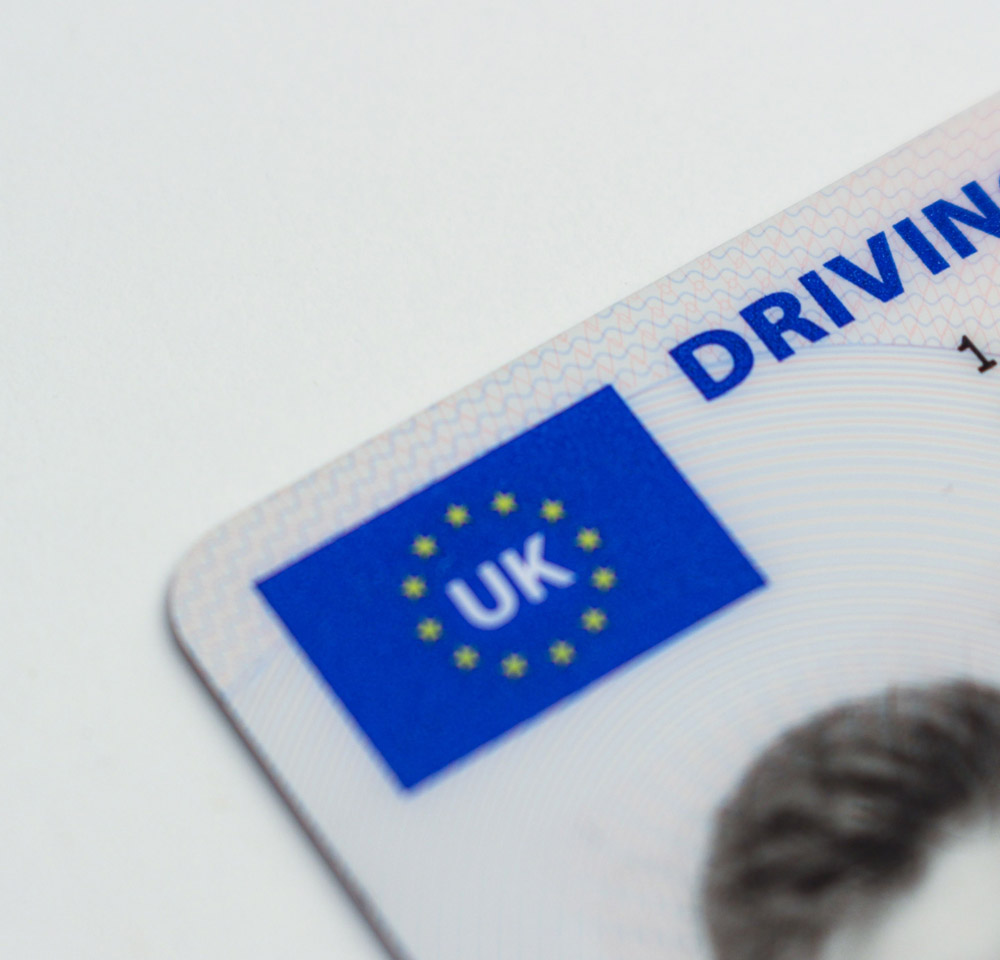
Yes, if you’re moving abroad permanently, you’ll likely need to exchange your UK driving licence for a local one. You usually need to complete this either six or 12 months after your arrival, depending on the country you’re settling in.
Most countries will allow you to simply exchange your full UK licence rather than taking the test again, so long as your licence is still valid and hasn’t expired.
Many who’ve gone through the process suggest you should apply for this as early as possible so you aren’t at risk of driving without a licence. It’s usually a fairly simple exchange, and if you ever want to move back to the UK, you can reapply.
Will I need to change my vehicle to a left-hand drive car?
No, there aren’t any rules against driving a right-hand drive vehicle in countries that use left-hand drive cars. However, if you’ll live in the country for several years or more, you might want to consider changing it to a left-hand drive vehicle (or buying a left-hand drive car). This process can be costly, but it’ll be a lot safer in the long run, especially if you use your vehicle on a daily basis.
Will my insurance cover me if I temporarily visit the UK in my car?
Yes, if you take out expat car insurance, this will include cover for driving back to the UK on visits. If you’ve taken out local insurance in the country you’ve gained permanent residence in, you’ll need to check your policy, but in general most will include third party cover for travelling to the UK.
If you’d like to increase this to fully comprehensive cover, we can help.
What about insurance before my car is registered in the country of my choice?
Many insurance companies cancel your cover as soon as your vehicle is permanently exported. We can cover you while you’re getting settled in the new country and sorting out the paperwork.
If I own a holiday home abroad, can I leave my car at the address year-round?
You can, but you will need to register it in the country you’re leaving it in. Most EU countries will only allow up to six months’ temporary use. Bear in mind, however, that driving a right-hand drive car in countries that drive on the right can be quite difficult to get used to, so you might want to consider switching it to a left-hand drive vehicle if you’ll only be using it in the EU.

Driving rules in Europe may have changed since this article was updated in August 2026. Please check official government sources before travelling. This guide is for general information only and does not constitute legal or travel advice. While we aim to keep information up to date, we can’t guarantee its completeness or full accuracy.